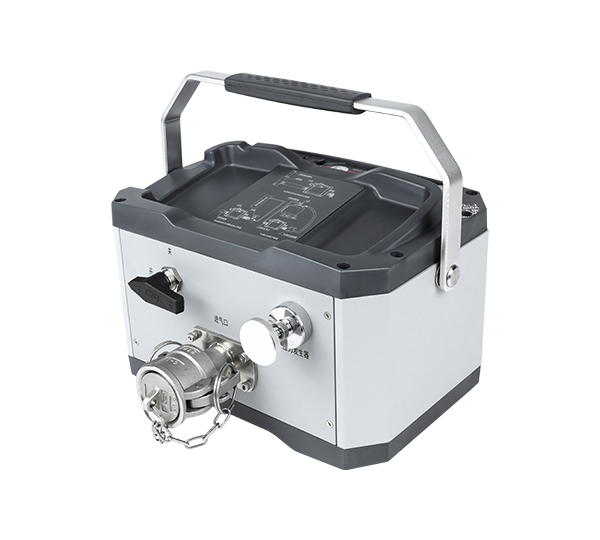
Overview
Fuel vapour recovery testing and vehicle emission testing are two established test regimes with fixed numeric acceptance limits. Both require equipment that reproduces the specified measurement faithfully under field conditions. kesense supplies the instruments for all of them, built to the applicable national emission and fuel quality standards.
Key specifications — 7003
| Parameter | Specification |
|---|---|
| Model | 7003 |
| Product type | Oil Gas Recovery Multi-Parameter Detector |
| Flow rate | Flow (0~13) L/min |
| Pressure range | Pressure (-2500~2500) Pa |
| Weight | ~5.0 kg |
| Power consumption | <3.0 W |
| Dimensions (W×D×H) | 289x330x196 mm |
| Specification | Passes vehicle refuelling certification |
| 3 tests in one | tightness, liquid resistance, gas-liquid ratio |
Measurement conditions
- Reference temperature — 25 °C ambient unless a row states otherwise
- Reference pressure — 101.3 kPa
- Humidity — non-condensing
- Response time — T90 as stated per configuration
Range, compensation mode, gas and response time are confirmed per configuration at order. Every figure above is tied to its stated condition — ask us for the exact reference behind any number.
Standards
GB 20952-2020
Applications
Petrol station vapour recovery compliance · tanker vapour balance testing · vehicle exhaust opacity testing · fuel terminal and depot monitoring · environmental inspection · LDAR at fuel storage and distribution sites
Configuration
Complete accessory set supplied: detection unit, hand and roller cases, tank cap sealing cover, spring tube, antistatic rubber hose, vapour recovery flow meter, flame arrester, ground wire, junction box and power adapter.
Frequently asked questions
What tests does the oil vapour recovery tester perform?
Three, and they share one instrument. The tightness test pressurises the vapour recovery system with nitrogen to a specified level and compares the residual pressure after a set holding time against the minimum allowable limit. The liquid resistance test passes nitrogen at three specified flow rates and requires the pressure differential to stay below the limit at each. The gas-liquid ratio test compares collected vapour volume against dispensed fuel volume and requires the ratio to fall within the specified band. Our 7003 performs all three.
What acceptance limits apply to oil vapour recovery testing?
Under GB 20952-2020 and related regulations: nitrogen at 18, 28 and 38 L/min must not exceed pressure differentials of 40, 90 and 155 Pa respectively. The gas-liquid ratio must fall between 1.0 and 1.2. Treatment device emission concentration must not exceed 25 g/m³ as a one-hour average. Leak detection must not exceed 500 μmol/mol. Fence-line non-methane total hydrocarbon must not exceed 4.0 mg/m³ as a one-hour average. Equipment calibration pressure gauges must be calibrated at intervals not exceeding 90 days.
Which standards do the vapour recovery and smoke meter models meet?
The 7003 meets GB 20952-2020 for petrol station vapour recovery. The 7005 meets GB 20951-2020 for tanker transport. The 7004 transmission smoke meter meets GB 3847-2018 for diesel vehicles and GB 36886-2018 for petrol vehicles, with verification per JJG 976-2024.
Request a quotation
Send the application, the parameter or gas, the measurement range, the output protocol required and your target delivery date. An engineer will reply with a configuration recommendation and a price — normally within one working day.
Model: 7003 | Required options: ____________ | Output protocol: ____________ | Target delivery: ____________